
Could AI Assist Nigeria’s Energy Transition Scorecard?
Three Years In: Are We Really Making Progress?
In 2022, Nigeria launched an ambitious Energy Transition Plan (ETP) to reach net-zero emissions by 2060. Three years later, a simple but uncomfortable question remains:
How do we know if we are truly moving forward, or just recycling promises?
On paper, there is no shortage of tracking tools and frameworks:
- The Energy Transition Plan and the Nigeria Integrated Energy Planning Tool
- Civil society analysis from organizations such as Clean Technology Hub and BudgIT
- International indices like the World Economic Forum’s Energy Transition Index (ETI) and the Climate Change Performance Index (CCPI)
Yet these efforts sit in separate silos, using different metrics, timeframes, and assumptions. They inform experts, but they do not yet form a coherent public accountability system.
A Mixed Picture: Good Rankings, Hard Realities
On the global stage, Nigeria appears to be climbing.
- In the 2025 ETI, Nigeria scored 54.8/100, ranking 61st of 118 countries and first in Africa, up 48 places from 109th in 2024.
- In the CCPI 2026, Nigeria ranked 17th globally, again the highest-ranked African country.
These outcomes suggest that Nigeria’s policy signals, regulatory reforms, and planning efforts are being recognized.
But when we zoom in on lived realities, the story shifts.
A large share of Nigerians are still locked out of the benefits these indices suggest:
- Electricity access: Only about 61% of Nigeria’s 220 million people have access to electricity, leaving roughly 86 million Nigerians in the dark.
- Clean cooking: Just 26% use clean cooking solutions. More than 162 million people still rely on firewood, charcoal, or kerosene, with severe implications for health, deforestation, and emissions.
- Renewable energy: Solar capacity has grown from 1.5 MW in 2015 to 150 MW in 2022—a 100x increase on paper, but still negligible for a country of this size. Wind power has reached around 20 MW, enough for perhaps 15,000 households at best.
In absolute terms, these numbers are still far too small for a population of over 200 million. The global indices are moving faster than the everyday lives of ordinary Nigerians.
What’s the Real Cost of This Transition?
The Nigerian Extractive Industries Transparency Initiative (NEITI) estimates that achieving net-zero emissions by 2060 will require about $1.9 trillion, including roughly $410 billion for gas-related infrastructure alone. That translates to a need for around $10 billion in new capital every year.
Yet by mid-2025, Nigeria had mobilised only about $3.6 billion, leaving an estimated annual funding gap of $10–27 billion.
Without transparent, near real-time tracking of this finance:
- We cannot clearly see where the money is actually going.
- We cannot easily distinguish transformational projects from delays, white elephants, or outright waste.
- We cannot build the trust citizens and investors need to believe that funds are being used effectively.
This is the accountability gap. And it is exactly where artificial intelligence – particularly an AI-powered digital scorecard for the energy transition – starts to matter.
Can AI Help Close the Accountability Gap?
Artificial intelligence should not enter Nigeria’s energy transition as a buzzword, but as a practical tool for governance and public accountability.
Global research shows that AI can:
- Improve capital efficiency by optimising which projects get funded, in what sequence, and under what conditions.
- Enhance transparency and reporting by pulling data from multiple sources and turning it into clear, public-facing insights.
- Strengthen forecasting and planning for grid expansion, renewable integration, and demand management.
Institutions such as the World Economic Forum and leading climate think tanks have documented how AI can support energy system modelling, forecasting, and policy evaluation. The real challenge for Nigeria is to translate this potential into tools that ordinary citizens, journalists, and decision-makers can actually use.
Other African countries already offer useful examples of how digital tools can support accountability:
- South Africa’s Just Energy Transition Dashboard publishes quarterly updates on committed funds, project pipelines, and implementation status. It tracks hundreds of just transition projects and billions of dollars in finance, breaking big climate finance figures into a visible list of who is doing what, where, and with which resources.
- Ghana’s Energy Balance tool tracks national energy supply and the contribution of renewables year-on-year. Policymakers and the public can quickly see whether the country is actually shifting its energy mix in line with stated targets.
These are not one-off reports or pilot PDFs. They are live, digital systems that convert raw data into public accountability.
An AI-powered energy transition scorecard for Nigeria can build on these lessons: integrating multiple data sources, updating in near real-time, and making it possible for anyone—from a civil society group in Cross River to a journalist in Abuja—to follow the money and measure real progress.
A Nigerian Innovation: Green Echo RETT’s State-Level AI Scorecard
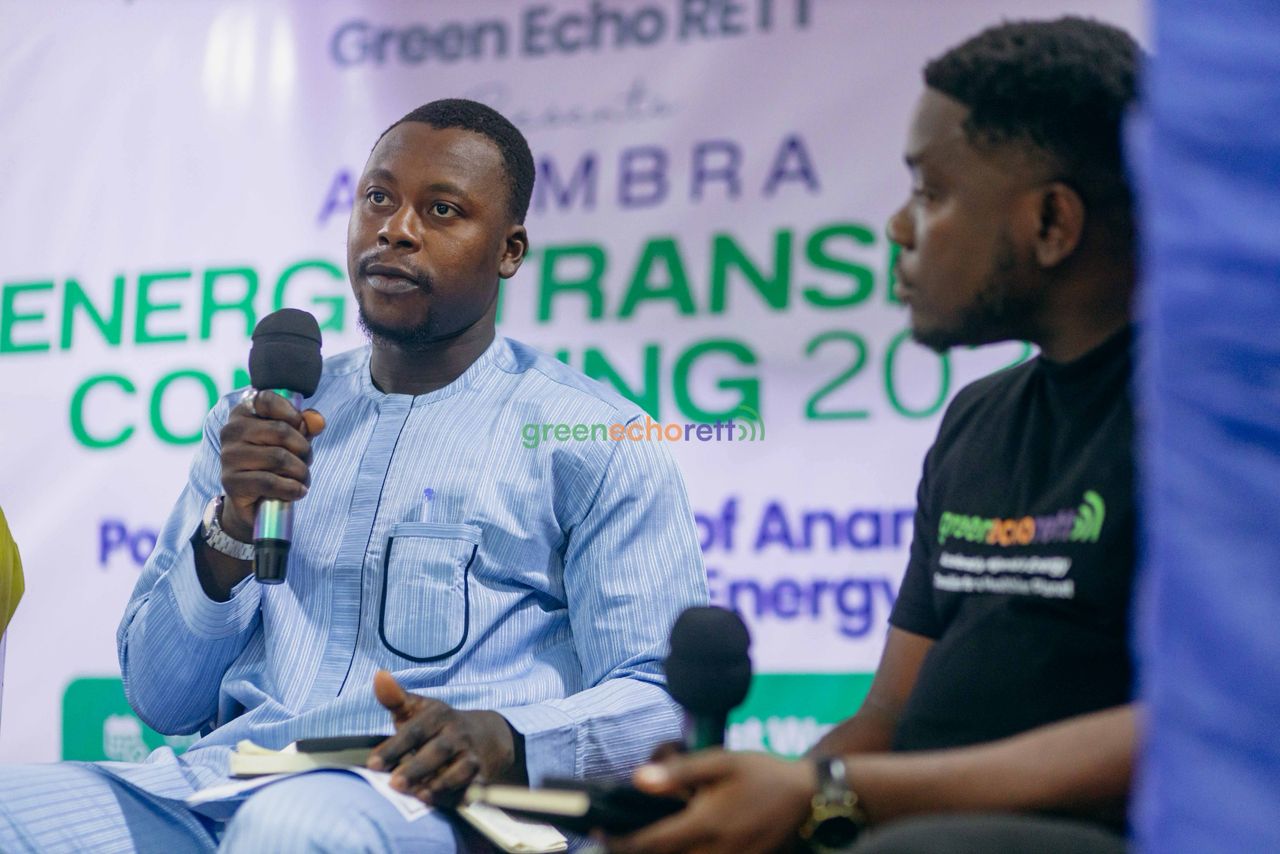
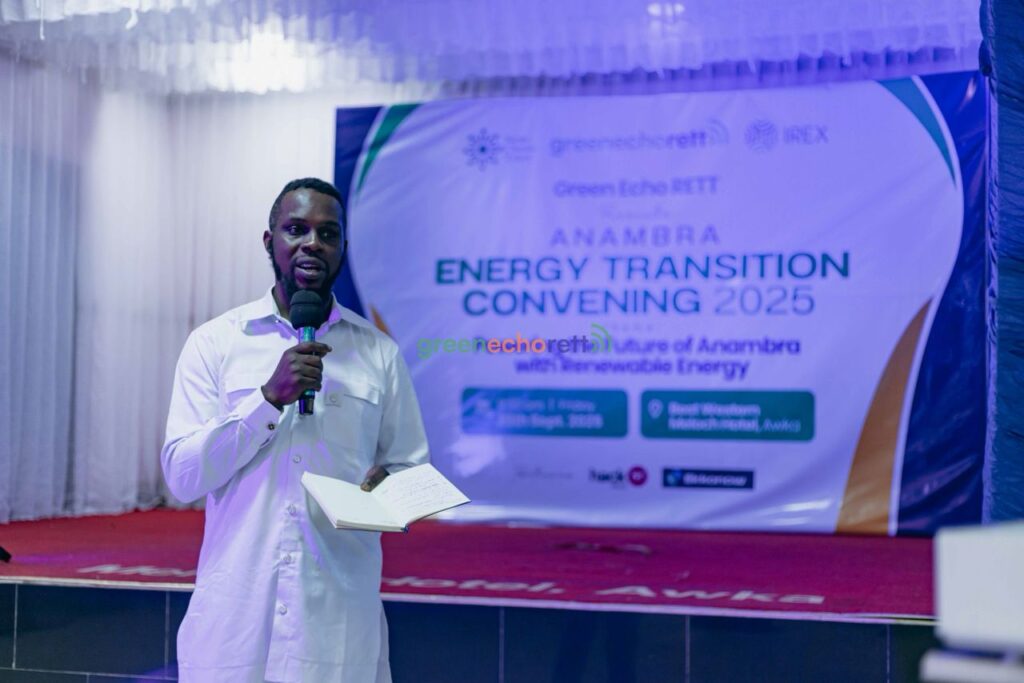
National energy transition metrics often hide deep differences between states. That gap is what Green Echo RETT, a Nigerian organisation, is working to close.
Green Echo RETT is developing an AI-powered digital scorecard that tracks energy transition performance across all 36 states, focusing on three core dimensions:
- Gigawatts of clean energy deployed
- Jobs and economic opportunities created through clean energy
- Tonnes of carbon emissions avoided
Building and maintaining a serious, AI-powered scorecard across all 36 states is not a small undertaking. Beyond the technology, it requires data pipelines, verification, regular convenings with state actors, and long-term programme management. A realistic estimate is that around $500,000 to $1,000,000 over the next decade would be sufficient to design, deploy, and operate such a system at scale. Set against the tens of billions of dollars Nigeria needs every year for its energy transition, this is a relatively small but very high-leverage investment in accountability.
Developed in partnership with the Center for Global Learning and Innovation at Michigan State University, alongside energy experts and state actors, the scorecard is designed to democratise energy transition information so that it is not reserved for technocrats alone.
Imagine a citizen in any Nigerian state being able to:
- See real-time or regularly updated data on their state’s clean energy performance
- Compare their state with others at a glance
- Use that information to ask sharper questions, shape public debate, and influence political choices
That is what an AI-powered state-level scorecard can unlock: a shift from opaque national averages to transparent, state-level reality that citizens can see, interrogate, and act upon.

Why State-Level Monitoring Matters Now
The Electricity Act of 2023 changed the rules of the game. It decentralised Nigeria’s power sector, allowing states to generate, transmit, and distribute electricity within their borders.
This means:
- States are no longer passive recipients of federal policy; they are active energy market players.
- The pace and quality of the energy transition will now vary sharply by state, depending on leadership, institutions, and local priorities.
In 2025, the Society for Planet and Prosperity published Nigeria’s first Subnational Climate Governance Ranking, assessing all 36 states on institutions, policies, budgets, implementation, and transparency. The gaps were stark: a handful of frontrunners, many laggards.
An AI-based scorecard like Green Echo RETT’s can turn this kind of periodic ranking into continuous monitoring. Instead of static PDFs every few years, policymakers and citizens could have a living, state-by-state view of where progress is accelerating, where it is stalling, and where pressure or support is most urgently needed.
When Citizens Can See the Numbers
Nigeria’s Energy Transition Plan projects around 340,000 clean energy jobs by 2030 and 840,000 by 2060 in sectors such as solar, clean cooking, transport, and grid infrastructure. But without robust, independent tracking, these remain aspirational figures on paper.
An AI-driven digital scorecard could help citizens and civil society verify, in concrete terms:
- Are new clean energy projects actually being commissioned in their state?
- Are the promised jobs materialising, and who is getting them?
- Are investments reaching underserved and off-grid communities, not just major cities?
- Are emissions trends and fossil fuel expansion truly consistent with Nigeria’s climate commitments?
Today, the Climate Action Tracker rates Nigeria’s climate action as “Almost sufficient” – close to a 1.5°C pathway, but still vulnerable to policy slippage and continued oil and gas expansion.
Real-time, AI-supported monitoring could act as an early-warning system, flagging when Nigeria’s actions begin to diverge from its commitments and giving citizens, journalists, and policymakers the evidence they need to demand course correction.
The Tool We Need, Not the One We Fear
The evidence suggests that an AI-assisted energy transition scorecard is not just feasible, it is necessary.
- The data already exists, scattered across planning tools, government reports, regulatory filings, and civil society databases.
- The technology to integrate, analyse, and visualise that data is mature and widely available.
- The need is urgent, as climate impacts intensify and financing pressures grow.
What remains is:
- Institutional will to integrate fragmented datasets and open them up to public scrutiny
- Political courage to tolerate, and respond to, what transparent data reveals
- Citizen demand for clear, state-level performance tracking
Climate action in Nigeria is no longer theoretical. Desertification in the North, flooding in the Middle Belt, and coastal erosion in the South are already reshaping livelihoods and landscapes. At the same time, around 39% of Nigerians still lack electricity, and 74% lack access to clean cooking, meaning the energy transition must be both a decarbonisation project and a development project.
Green Echo RETT’s proposed AI-powered, state-level scorecard is one step toward closing the gap between what is promised and what is delivered. It offers a way to move from opaque, irregular reporting to continuous, citizen-facing accountability.
The question is no longer whether AI can assist Nigeria’s energy transition scorecard. The real question is:
Will Nigeria deploy these tools in time – before the financing gap widens, implementation delays harden into failure, and public trust in climate governance erodes further?
The data exists.
The technology exists.
The urgency is clear.
What Nigeria needs now is the political will to be transparent – and citizens who can see the numbers and insist on accountability.